
Is Fibroblast Safe for Eyelids?

Loose upper eyelid skin can make your whole face look more tired, even when everything else still feels fresh. That is why one of the most common questions clients ask is: is fibroblast safe for eyelids? The honest answer is yes, it can be safe for the eyelid area when the client is properly screened, the treatment is performed by a highly trained provider, and aftercare is followed closely. But this is not a casual treatment, and the eyelids are not an area for shortcuts.
Is fibroblast safe for eyelids, really?
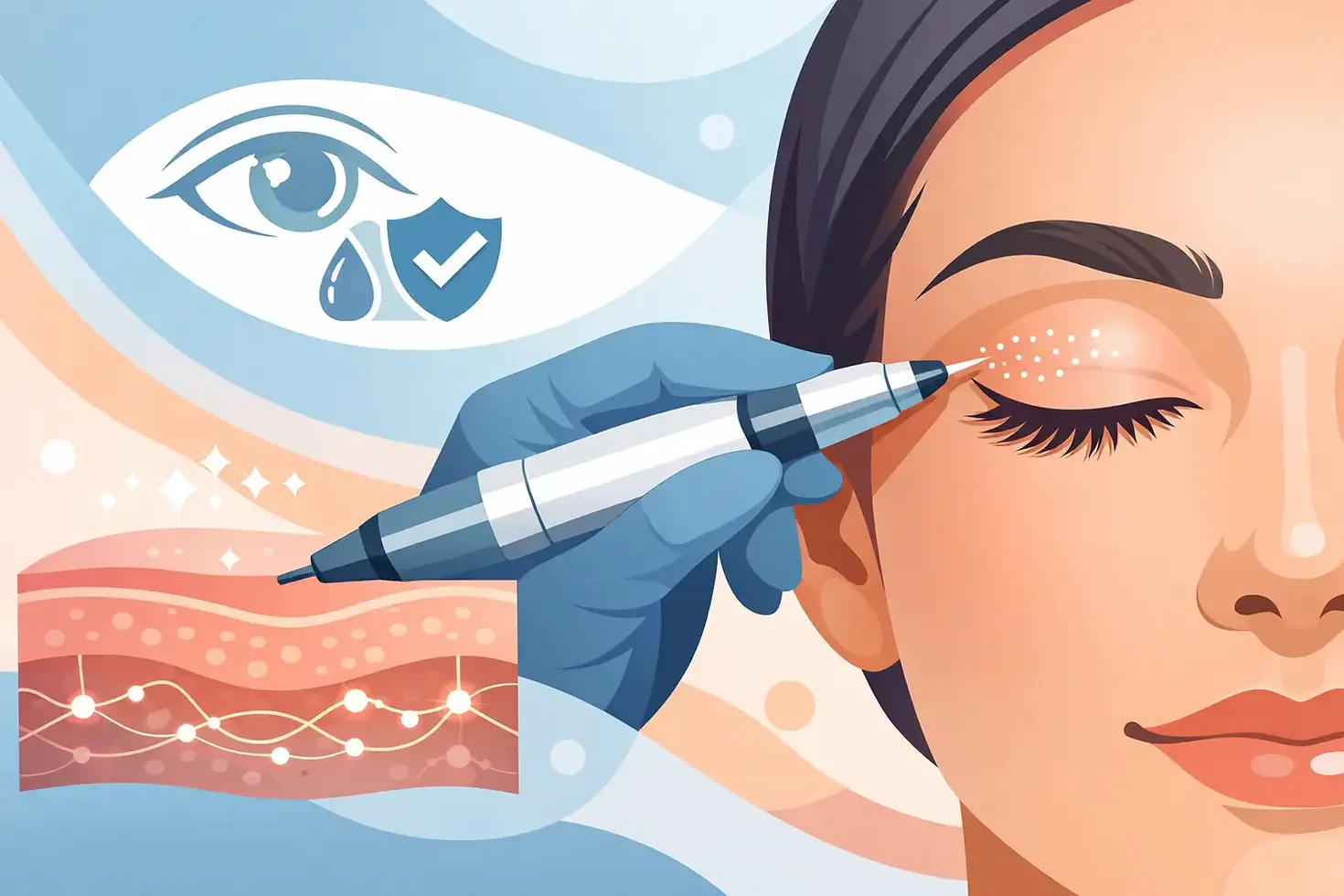
Fibroblast plasma treatment is often chosen for crepey skin, mild hooding, and laxity around the eyes because it works without surgical cutting. The device creates tiny controlled dots on the skin surface, which trigger contraction and a wound-healing response. Over the following weeks, the skin gradually tightens as collagen remodeling takes place.
That sounds appealing, especially for women who want visible lift without blepharoplasty. But safety depends less on the treatment name and more on the person holding the device, the quality of the consultation, and whether your skin and eye area are appropriate for this kind of energy-based procedure.
For the right client, eyelid fibroblast can create a meaningful improvement in texture and tightening. For the wrong client, or in inexperienced hands, it can lead to prolonged redness, pigment issues, delayed healing, poor cosmetic results, or irritation in a very delicate area.
Why the eyelid area needs extra caution
Eyelid skin is some of the thinnest skin on the body. It also sits close to the eye itself, which makes precision non-negotiable. A treatment that may be tolerated well on another part of the face can carry a different level of risk when performed near the lash line and orbital area.
That is why a strong provider does more than say you are a candidate. They evaluate skin tone, laxity, medical history, eye anatomy, healing tendencies, and your expectations. If someone has significant hooding, very thin mature skin, active eye irritation, a history of poor healing, or a tendency toward post-inflammatory hyperpigmentation, the plan may need to change.
Sometimes the safest answer is not fibroblast at all. It may be a different treatment, a more conservative approach, or a referral for surgical evaluation if the amount of excess skin is beyond what plasma tightening can realistically improve.
What makes eyelid fibroblast safer
Safety starts long before treatment day. A proper consultation should review your health history, medications, skin behavior, recent treatments, sun exposure, and any eye-related conditions. If that part feels rushed, that is a red flag.
A safe eyelid fibroblast treatment also depends on exact technique. The provider must understand treatment depth, dot spacing, energy settings, and where not to treat. Aggressive work is not always better work. In fact, overtreating the eyelid area can increase the chance of complications and can leave the skin looking worse before it ever has a chance to improve.
Protective protocols matter too. The eye area should be treated with careful positioning and strict attention to client comfort and tissue response. This is not a one-size-fits-all service. Mature skin, Fitzpatrick skin type, and the degree of laxity all influence how the treatment should be performed.
When done well, the result should look like refined tightening, not trauma.
Who is usually a good candidate?
The best candidates usually have mild to moderate upper eyelid laxity, crepey texture, or early hooding and want a non-surgical option. They understand that fibroblast is a tightening treatment, not a surgical replacement, and they are willing to heal properly.
Clients who do well often have realistic expectations. They are not looking for dramatic overnight change. They want improvement, not perfection. They also understand that collagen remodeling takes time, so final results are not judged in the first week or two.
Good candidates are also able to commit to aftercare. That includes keeping the area clean, protecting healing skin from sun exposure, not picking flaking crusts, and avoiding products or activities that may disrupt recovery.
Who should pause or avoid it?
This is where nuance matters. If you are pregnant, breastfeeding, using certain medications, prone to keloid scarring, dealing with active infection, or managing uncontrolled health issues that impair healing, treatment may need to be postponed.
If you have very dark skin or a strong history of hyperpigmentation, your provider should discuss the pigment risk openly. That does not automatically mean no, but it does mean planning matters. Pretreatment prep, conservative settings, and post-care become even more important.
If you have severe eyelid drooping or excess skin that rests heavily over the lash line, plasma may not give the level of lift you want. In those cases, pushing a non-surgical option too far can be disappointing. The right expert will tell you that.
What are the actual risks?
Clients deserve a clear answer here. Even when treatment is performed correctly, eyelid fibroblast comes with downtime and side effects. Swelling is common, and around the eyes it can be significant for the first few days. Tiny carbon crusts form where the plasma dots were placed. Redness, tightness, tenderness, and a temporarily exaggerated appearance are all normal parts of healing.
The more concerning risks include infection, prolonged inflammation, hyperpigmentation, hypopigmentation, scarring, uneven texture, and unsatisfactory tightening. Eye irritation is also possible if the area is not treated and protected properly.
None of that means the treatment is unsafe across the board. It means this is a real aesthetic procedure, not a quick beauty add-on. The people who tend to have the best experience are the ones who go into it fully informed and fully screened.
Healing after eyelid fibroblast
Healing is one of the biggest reasons some clients underestimate this treatment. The initial downtime is usually the most intense in the first several days, especially because swelling around the eyes can make the area look more dramatic before it settles.
The small crusts should be left alone to fall off naturally. Picking them too early can increase the risk of marks and pigment changes. Sun protection is critical after the area heals, because fresh skin is more vulnerable to discoloration.
Results do not show up all at once. You may notice early tightening as the skin contracts, but the more meaningful improvement develops gradually as collagen rebuilds over the following weeks. That delayed payoff is part of why provider selection matters so much. You are trusting someone not only with treatment day, but with how your skin recovers afterward.
How to choose the right provider
If you are asking is fibroblast safe for eyelids, you are really asking whether your provider can perform it safely. That is the heart of it.
Look for someone with advanced training in plasma fibroblast, strong before-and-after evidence on real clients, and a consultation process that feels detailed rather than salesy. Ask how often they treat eyelids specifically, what their contraindications are, and what they do if a client is not a candidate. A provider with standards will never treat everyone.
You also want honest communication about what fibroblast can and cannot achieve. If someone promises surgical-level correction with no risk and no downtime, walk away. That kind of language is not confidence. It is a warning sign.
At a practice built around advanced non-surgical rejuvenation, safety and results should work together. Precision is what creates confidence.
The bottom line on eyelid safety
Fibroblast can be a safe and effective option for eyelids in the right hands and for the right client. It offers a non-surgical path to visible tightening, but it is still a controlled skin injury in one of the most delicate areas of the face. That means screening, technique, healing, and expectations all matter.
If you are considering it, do not choose based on price alone and do not let social media clips make the treatment look simpler than it is. The best outcomes come from experienced assessment, customized treatment planning, and respect for the fact that eyelid skin deserves expert care.
When your goal is to look more lifted, rested, and confident without surgery, the smartest first step is not chasing the fastest appointment. It is choosing a provider who knows when fibroblast is the right answer and when it is not.


Comments